When a geyser bursts or stops heating, the first question our plumbers get is whether it is worth going solar or gas instead of simply fitting another electric one. The honest answer depends on your roof, your budget, how old the geyser is and how long you plan to stay. This guide compares the three options we are asked about most in Cape Town: a new solar geyser, converting the geyser you already have to run on solar, and a gas geyser.
The three options at a glance
| New solar geyser | Convert existing geyser to solar | Gas geyser | |
|---|---|---|---|
| Typical installed cost | R22,500 to R35,000 | R7,000 to R16,000 (solar PV conversion) or R12,000 to R28,000 (thermal kit) | R8,000 to R18,000 |
| Running cost per month | R0 to R150 in summer, more in winter | R0 to R300, depending on setup | R400 to R800, depending on use |
| Typical payback vs electric | Roughly 3 to 5 years | Roughly 2 to 4 years | Roughly 1 to 2 years |
| Hot water on a cloudy day | Needs electric backup | Needs electric backup | Yes, at full strength |
| Works in load shedding | Yes (thermal system) | Depends on the system | Yes |
| Best for | Long-term homeowners with a sunny roof | A geyser under about 8 years old with a sunny roof | Shaded roofs, tight budgets, quick payback |
These are indicative published ranges, not quotes. Your actual cost depends on the tank size, roof access, pipe runs and the brand, so use the table to shortlist and a site visit to decide.
Option 1: A new solar geyser
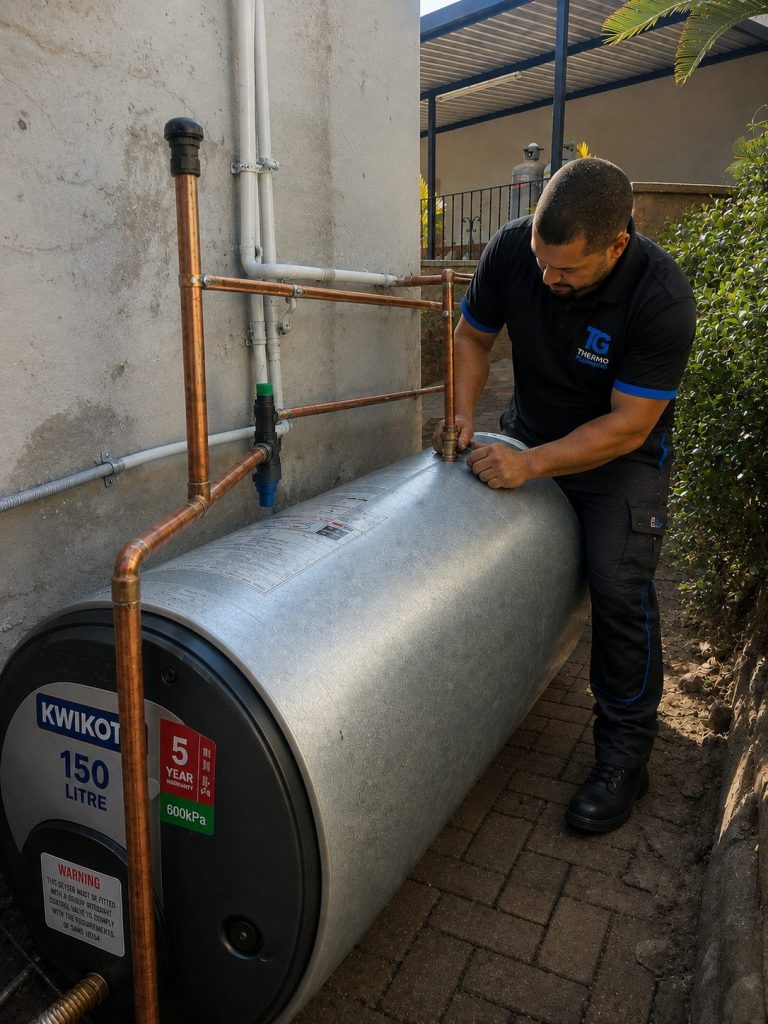
A solar geyser replaces your electric geyser with a system that heats water from the sun, using roof collectors and an insulated tank with an electric element as backup. It has the highest upfront cost of the three but the lowest running cost, and a well-installed system is commonly quoted to last 15 years or more. It is the best long-term choice if you plan to stay in the house, your roof has a clear north-facing area, and your existing geyser is old enough that you will be replacing it anyway.
The Cape Town catch is winter. Cloudy, wet weeks mean the backup element does more of the work, so your savings are strongest from spring to autumn. A good installer will size the system for your household and tilt and orient the collectors to make the most of low winter sun.
Option 2: Converting your existing geyser to solar
If your current geyser is in good shape, converting it is the cheapest way to get solar hot water. There are two main routes. A thermal conversion adds roof collectors and a circulation pump that feed the existing tank. A solar PV conversion mounts a few panels that power the geyser element through a diverter, so you heat water with your own electricity and avoid plumbing on the roof. The PV route also suits homes that plan to add a full solar system later.
Conversion only makes sense when the tank is sound. As a rule of thumb, a geyser that is under about five to eight years old, with no rust, leaks or weeping valves and good access for pipework, is a candidate. If the tank is older or has a history of problems, converting it means spending money on a unit that may fail soon, and replacing it is the better investment.
Option 3: A gas geyser
A gas geyser heats water on demand from bottled gas, so it delivers hot water at full strength in any weather and during load shedding. It costs the least to install and pays itself back quickly against an electric geyser, but you pay for gas every month, and gas prices move. It is a strong option for shaded houses, townhouses and flats where roof space is a problem, and for households that want hot water without depending on sun or the grid.
Gas installation is regulated. It must be done by a registered gas installer and finished with a gas Certificate of Conformity, and it needs proper ventilation or a flue plus a safe position for the gas cylinders. Never install gas yourself, and be wary of any quote that does not mention the certificate.
What Cape Town’s weather means for each option
Cape Town gets a lot of sun from late spring to early autumn, so solar hot water performs very well for half the year. Winter brings cloud, rain and short days, so solar systems lean on their electric backup. Gas is unaffected by weather. Many Cape Town households split the difference: solar for the savings, with the backup element on a timer, or gas where the roof is poor.
Which option suits you?
- Choose a new solar geyser if your geyser is near the end of its life, you plan to stay for five years or more, and your roof has a clear sunny area.
- Choose a conversion if your geyser is under about eight years old and in good condition, and you want the lowest upfront cost for solar hot water.
- Choose gas if your roof is shaded or small, you want the fastest payback, or you want hot water that does not depend on the weather or the grid.
- Stay electric for now if you are selling soon. A working, compliant electric geyser with a blanket, a timer and the thermostat at 60 degrees is cheap to keep.
Compliance and paperwork
A geyser installation should come with the paperwork: a plumbing certificate of compliance for the water side, an electrical certificate for any electrical work or backup element, and a gas certificate of conformity for gas. If you are selling in Cape Town you will need these, and an insurer may ask for them after a burst geyser. Keep the invoice, warranty and certificates together.
Questions to ask before you accept a quote
- What is the full installed price, including the tank, collectors or gas equipment, pipework, drip tray, valves and certificates?
- Is the quote for a new system or a conversion, and why was that recommended for my geyser?
- What is the warranty on the tank, the collectors or burner, and the labour?
- How will the system be positioned to catch winter sun, or where will the gas cylinders sit?
- Will I receive the plumbing, electrical or gas certificates when the job is finished?
Frequently asked questions
How much does a solar geyser cost in Cape Town? A complete new system is commonly quoted between about R22,500 and R35,000 installed, depending on tank size and roof access. Conversions cost less. Always get a written quote that lists what is included.
Can I convert my existing geyser to solar? Often yes, if the tank is fairly new, free of leaks and has easy access. A site visit shows whether a thermal or solar PV conversion suits your setup, or whether replacing the geyser is the better choice.
Is gas cheaper than solar? Gas costs less to install but more to run, because you buy gas every month. Over ten years a solar system generally works out cheaper, while gas wins on upfront cost and on reliability in bad weather.
Does a solar geyser work in a Cape Town winter? Yes, but less efficiently. On cloudy days the electric backup element switches on, so you always have hot water, just with smaller savings.
Is gas safe in a home? Yes, when it is installed by a registered gas installer to the regulations, with correct ventilation and a gas Certificate of Conformity. Unregistered installations are a real risk.
My geyser is old but still working. Should I replace it now? If it is more than about ten years old, shows rust around the fittings or drips from the valve, plan the change rather than waiting for a burst. A planned replacement costs less than an emergency one plus water damage.
Why Cape Town homeowners choose Thermo Group
Hot water jobs often need a plumber, an electrician and sometimes a solar installer. With Thermo Group you deal with one company for all of it.
- One team for plumbing, electrical and solar. The pipework, the electrical connection and the solar or gas equipment are handled together, so there is no finger-pointing between trades.
- Honest advice, not a fixed pitch. We recommend the option that suits your geyser, roof and budget. If converting your old geyser is a waste of money, we will tell you.
- Compliance done properly. We supply the certificates the job requires, which matters when you sell or claim on insurance.
- Local to Cape Town. We work across the city and know its older houses, its winters and its municipal requirements.
- A written quote you can compare. You see what is included before you commit.
Get your geyser quote
Not sure whether to go solar, convert or switch to gas? Tell us about your geyser and roof and we will recommend the right option and quote it in writing. Request a plumbing quote or look at our geyser installation service in Cape Town. If your geyser is leaking or has stopped heating, our geyser repair team can help, and if you are selling, read about the plumbing compliance certificate. Planning a full home solar system as well? See our sister company’s Cape Town solar guide. For anything urgent, speak to our Cape Town plumbers.